
The Best Golf Apps for Indoor Simulator Practice
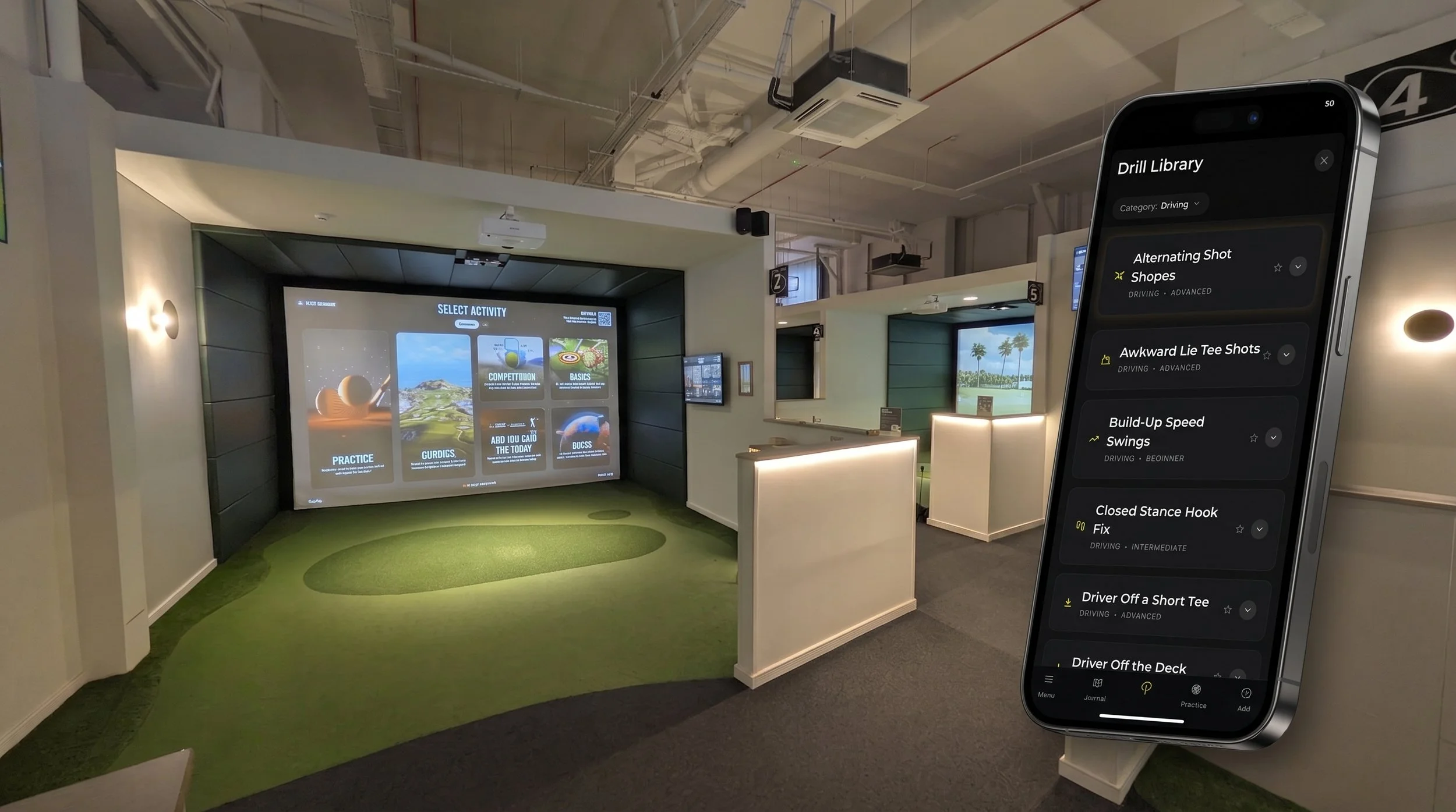
Image: TeeClub (Salford Quays). Learn more about their setup here.
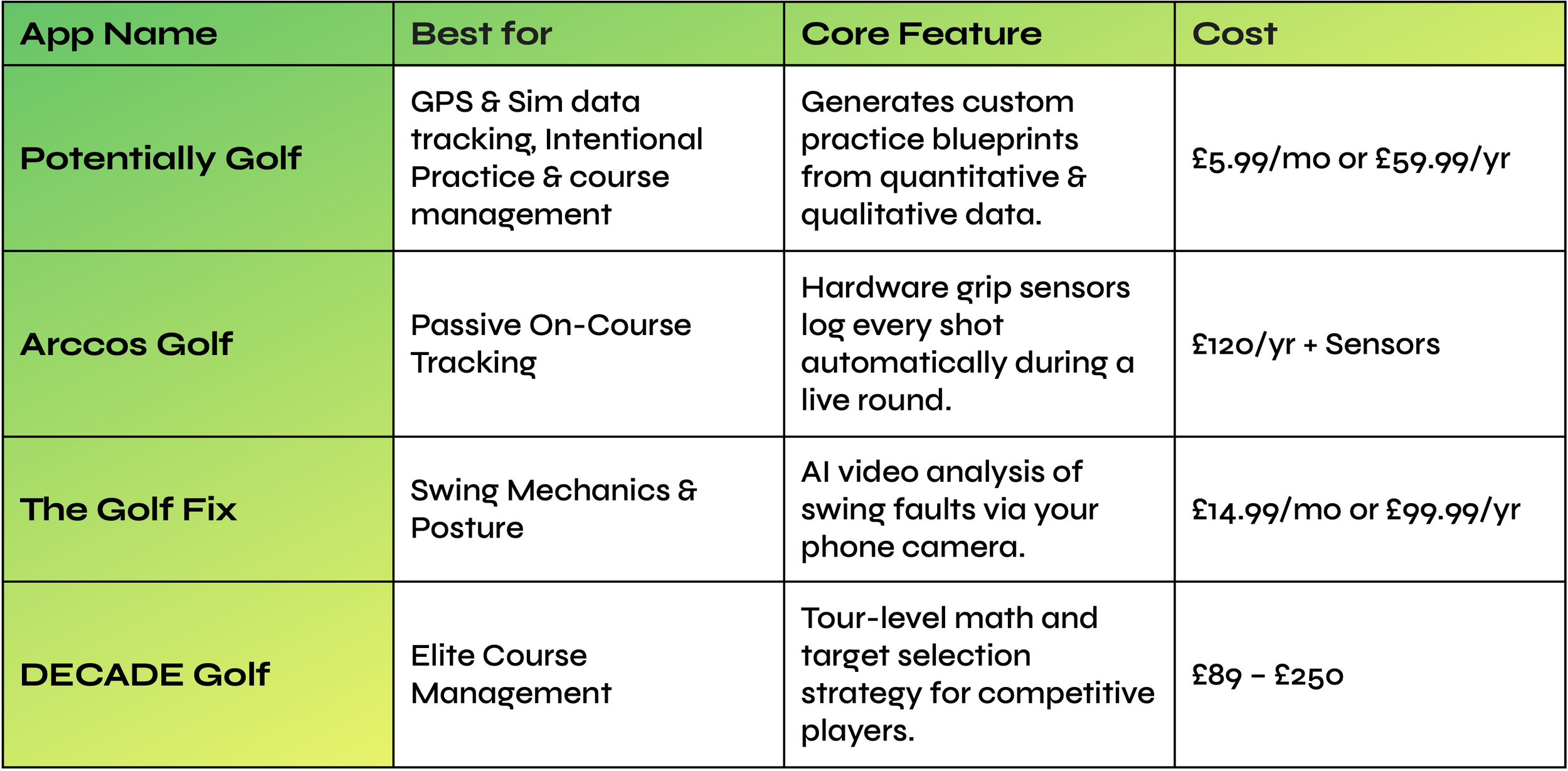
The best golf app for simulator practice depends on your goals. To run the simulator graphics, GSPro is the standard. For passive on-course tracking, use Arccos. However, to translate your TrackMan or Foresight data into structured, handicap-lowering practice blueprints, Potentially Golf is the dedicated practice software companion.
Every winter, millions of golfers move indoors. We book an hour in a TrackMan bay, hit 80 balls with a 7-iron, obsess over our Smash Factor, and leave.
We are data-rich, but insight-poor. Come spring, when we touch grass again, our ability hasn’t moved an inch.
To actually improve over the winter, you don't just need software to run the simulator screen. You need an app that tells you exactly what to do while you are in that bay.
Here is how the top golf apps compare when it comes to fixing the indoor practice trap.
Simulator Engines vs. Practice Companion Apps
If you ask a search engine for "simulator apps," it will usually list software like GSPro, E6 Connect, or Awesome Golf. It is important to know the difference: those are the gaming engines that project the driving range onto the impact screen. They track the physics of the golf ball.
A practice companion app (like Potentially Golf) runs on your phone while you are in the bay. It acts as a caddie and coach combined, taking the raw numbers before giving you a structured session plan to follow so you aren't just blindly slapping balls into a net.
Golf App Comparison: Tracking vs. Practice
How to use TrackMan data to improve on the course
A launch monitor will tell you that your 8-iron carries 155 yards with a 35-yard lateral dispersion. On its own, that data doesn't lower your score. To use TrackMan data effectively, you must map that dispersion against real-world course targets.
Instead of just chasing pure carry, golfers should use apps that build specific target constraints. If your dispersion means 45% of your approach shots will leak into a right-hand bunker, your indoor practice session needs to focus entirely on shifting that baseline—not just trying to swing harder to increase your ball speed.
Which golf app gives the best practice drills?
Most generic golf apps offer a static library of one-size-fits-all tips. For dynamic, personalised drills, Potentially Golf is currently the most effective tool.
Instead of guessing what to work on, the app analyses your weak spots—whether from logged GPS on-course rounds or indoor sim data—and automatically generates a bespoke practice plan. You walk into the bay, open your blueprint, and follow clear, structured drills with specific target goals designed to lower your handicap.
Crucially, the Coach within Potentially Golf challenges your assumptions. Reflecting after a practice drill or round means Coach understands what you were thinking, how you felt, and why certain shots resulted in what they did. Clipped a tree off the tee? Potentially knows. Not clearing your hips through the downswing again? Potentially knows.
Arccos vs. Potentially Golf: What is the difference?
Arccos Golf is the industry leader for passive data logging. Using sensors in your grips, it silently tracks your stats while you play on the course. It tells you what happened. While they have recently introduced practice drills, these remain largely static and repetitive.
Potentially Golf is an active performance tool that tells you what to do next. While Arccos might highlight that you are losing strokes on approach shots, Potentially provides the exact practice blueprint you need to fix it before your next Saturday medal. And as your game evolves, the app adapts—if a recurring issue resurfaces, it adjusts the drill parameters to challenge you differently. It learns with you.
You can download Potentially Golf® now from your app store of choice.
